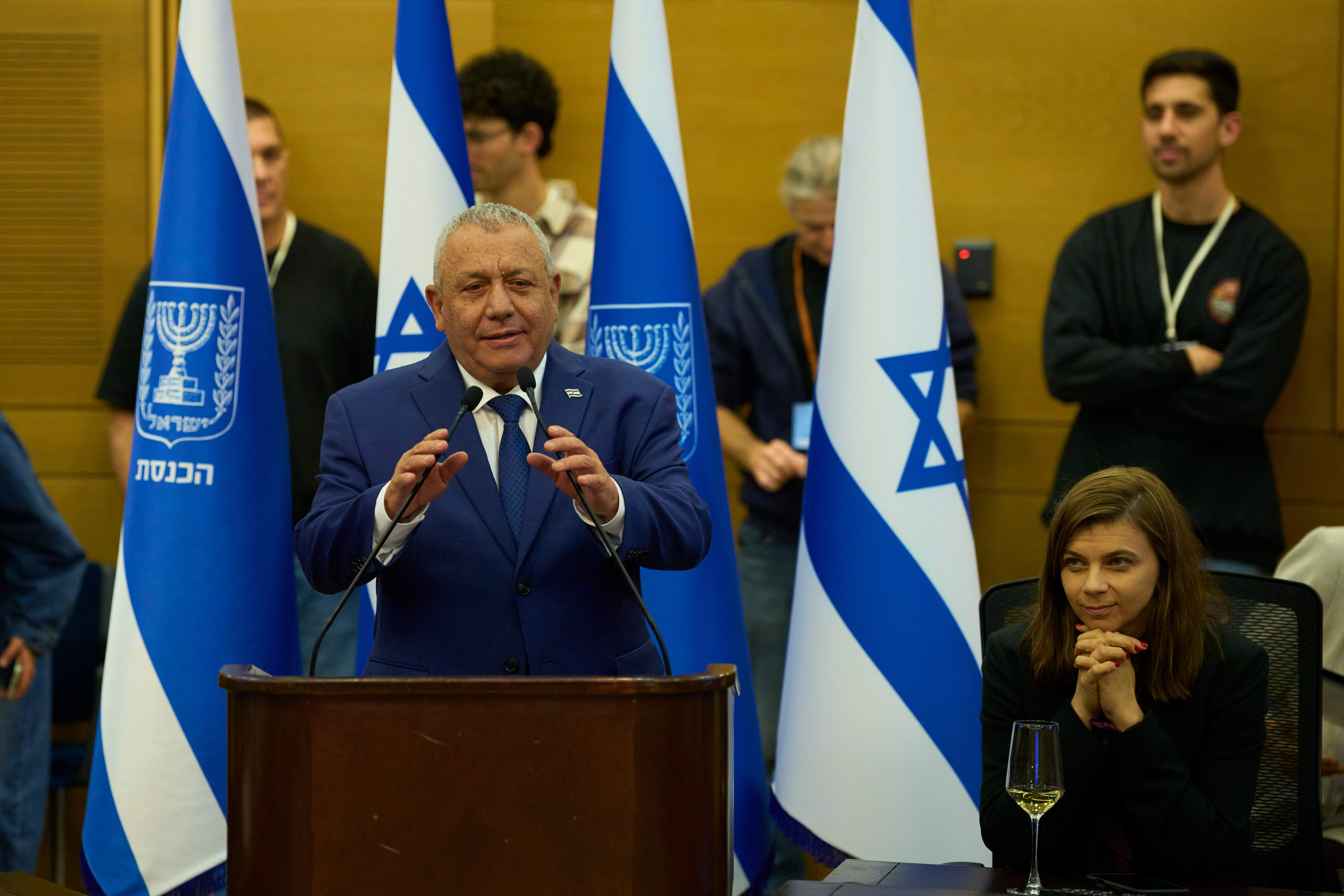
A prime minister who spent months attacking an opponent as unfit for office just offered to let that exact opponent take the top job first. That isn't normal coalition horse-trading. It's a high-stakes survival play after a deadlock that left nobody with a clear path to power.
When Benjamin Netanyahu and Gadi Eisenkot sat down on Sunday morning, the talk wasn't just about cabinet seats or policy compromises. Three weeks after Israel's president tapped Eisenkot to try to build a governing coalition following the inconclusive Oct. 27 elections, Netanyahu floated a rotation deal that would put Eisenkot in the prime minister's chair first. Their joint statement said the meeting opened with a security briefing before shifting to a national unity government and bridging deep differences.
If you're trying to figure out whether this unity push is real or a political trap, look past the polite wording in the joint statement. Neither bloc cleared the 61-seat threshold in the 120-member Knesset. Likud won the most votes, yet Netanyahu's traditional right-wing and ultra-Orthodox allies fell short of a majority and trailed the opposition bloc. Meanwhile, Eisenkot has the mandate, a Dec. 6 deadline before he can ask the president for a two-week extension, and a messy coalition puzzle that still hasn't clicked together.
Why This National Unity Government Offer Looks Like a Trap
I've watched enough Israeli coalition arithmetic to know that a sudden willingness to hand over the premiership first usually comes with strings attached. Usually, heavy ones. Additional information into this topic are detailed by Wikipedia.
Netanyahu has ruled longer than any other prime minister in Israel's history, and he isn't famous for giving up leverage without getting something big in return. By offering Eisenkot the first turn in a rotation, Netanyahu shifts the pressure right back onto the opposition. Suddenly, voters who wanted a clean break from Netanyahu's leadership are watching Eisenkot sit across the table from him.
Tamar Hermann, who heads the Viterbi Center for Public Opinion and Policy Research at the Israel Democracy Institute in Jerusalem, put the political tension bluntly. As she noted, a unity deal can function as another way to sideline Arab parties—even after Arab-led factions posted historic gains in the Oct. 27 vote. Even if many Israelis tell pollsters they worry about division in the country, voters who backed the opposition may view a shared Netanyahu-Eisenkot government as a straight-up betrayal by Eisenkot.
Look at how quickly the reactions split among key political players:
- Yousef Jabareen, leader of the Joint List alliance of three Arab-led parties, urged leaders to reject Netanyahu's pitch and push to oust him this week based on what he called the shared will of Jews and Arabs alike.
- Yair Lapid, a Jewish-majority opposition leader who briefly served as prime minister in the 2021 coalition that ended Netanyahu's earlier 12-year run, dismissed the offer outright as a scam.
- Naftali Bennett, another former prime minister from that same 2021 government, welcomed letting Eisenkot serve first and argued a unity coalition should rest on parties representing Israelis who perform military or national service.
That split tells you everything you need to know about why a unity government is so hard to pull off. You can't easily stitch together anti-Netanyahu voters, Arab-led parties, military-service advocates, and Netanyahu's own camp without breaking promises to someone. Honestly, trying to please everyone in a fractured Knesset is one of the fastest ways to alienate your own base.
What's Actually Driving the Deadlock After Oct. 27
Elections don't happen in a vacuum, and this deadlock sits on top of years of exhausting conflict and unresolved grievances. Voters aren't just arguing over tax rates or municipal budgets. They're living with the weight of the Hamas-led Oct. 7, 2023 attacks and more than three years of multi-front war—fighting in Gaza, clashing with Iran-backed Hezbollah in Lebanon, and confronting Iran directly after Israel and the United States launched joint attacks on Feb. 28.
Three fault lines keep tripping up every coalition scenario:
- Who belongs inside the coalition: Opposition parties backing Eisenkot don't even agree among themselves on whether to bring Arab-led parties into the fold or deal with ultra-Orthodox factions.
- Ultra-Orthodox military draft rules: Mandating military service for ultra-Orthodox Jews remains a massive flashpoint. It touches fairness, burden-sharing after years of war, and the survival of traditional religious-political alliances.
- Accountability for Oct. 7: Pushing for a state-led investigation into the security failures around Oct. 7 goes straight to the heart of leadership responsibility. A prime minister who wants to protect his political standing has every reason to fight—or at least slow-walk—an inquiry that could implicate his record.
When you add those issues together, a simple "let's all get along" unity government starts looking less like a cure and more like a pressure cooker. If two sides with clashing agendas share power, big decisions often stall out right when the country needs clear direction.
What Smart Observers Miss About Rotation Deals
People outside Israeli politics often hear "rotation agreement" and assume it's a neat, orderly compromise. Split the term in half, shake hands, move on.
In practice, rotation deals in Israeli politics are notoriously fragile. Who goes first matters enormously. Going first gives you agenda power, visibility, and the chance to lock in appointments or policy moves before the second half ever arrives. Still, going first also means you own the tough calls—and the blame—while your partner waits in the wings with leverage over whether the deal survives.
There's also a timing trap here. Eisenkot holds the mandate right now, with Dec. 6 looming as a key marker before he can request a two-week extension from the president. If Eisenkot can't put together a working majority even with an extension, the president could turn to Netanyahu next. And if Netanyahu fails too, the country faces the prospect of fresh elections.
That looming threat of another election is the real glue behind a lot of this talk. Nobody wants to go back to voters empty-handed or get blamed for dragging the country into another round of campaigning while security threats and domestic divisions remain raw. Yet accepting a flawed unity deal just to avoid an election carries its own massive cost: losing credibility with the exact voters who put you in position to negotiate.
For anyone following the story through outlets like Global News or watching dispatches from Jerusalem, the biggest mistake is treating a meeting headline as a done deal. Talks happen all the time in Israeli politics. Turning talks into 61 stable Knesset votes—without triggering a revolt inside your own camp—is the hard part.
Practical Next Steps If You're Tracking the Coalition Talks
If you want to read the next wave of headlines without getting head-faked by spin, focus on concrete signals rather than warm statements:
- Watch the Dec. 6 deadline and extension request: Track whether Eisenkot asks the president for the two-week extension and whether any concrete seat counts or policy frameworks emerge alongside it.
- Check how Lapid, Bennett, and Arab party leaders respond to draft terms: Real momentum shows up when rival opposition figures stop trading insults over "scams" and start negotiating specific red lines on the draft, an Oct. 7 state inquiry, and coalition partners.
- Separate security briefings from political breakthroughs: Meetings between current and former defense/security figures often start with operational updates. Don't confuse a sober security discussion with an agreement to govern together.
- Follow independent polling and research commentary: Look at analysis from groups like the Israel Democracy Institute to see how voters actually react to rotation talk before assuming unity is popular on the ground.