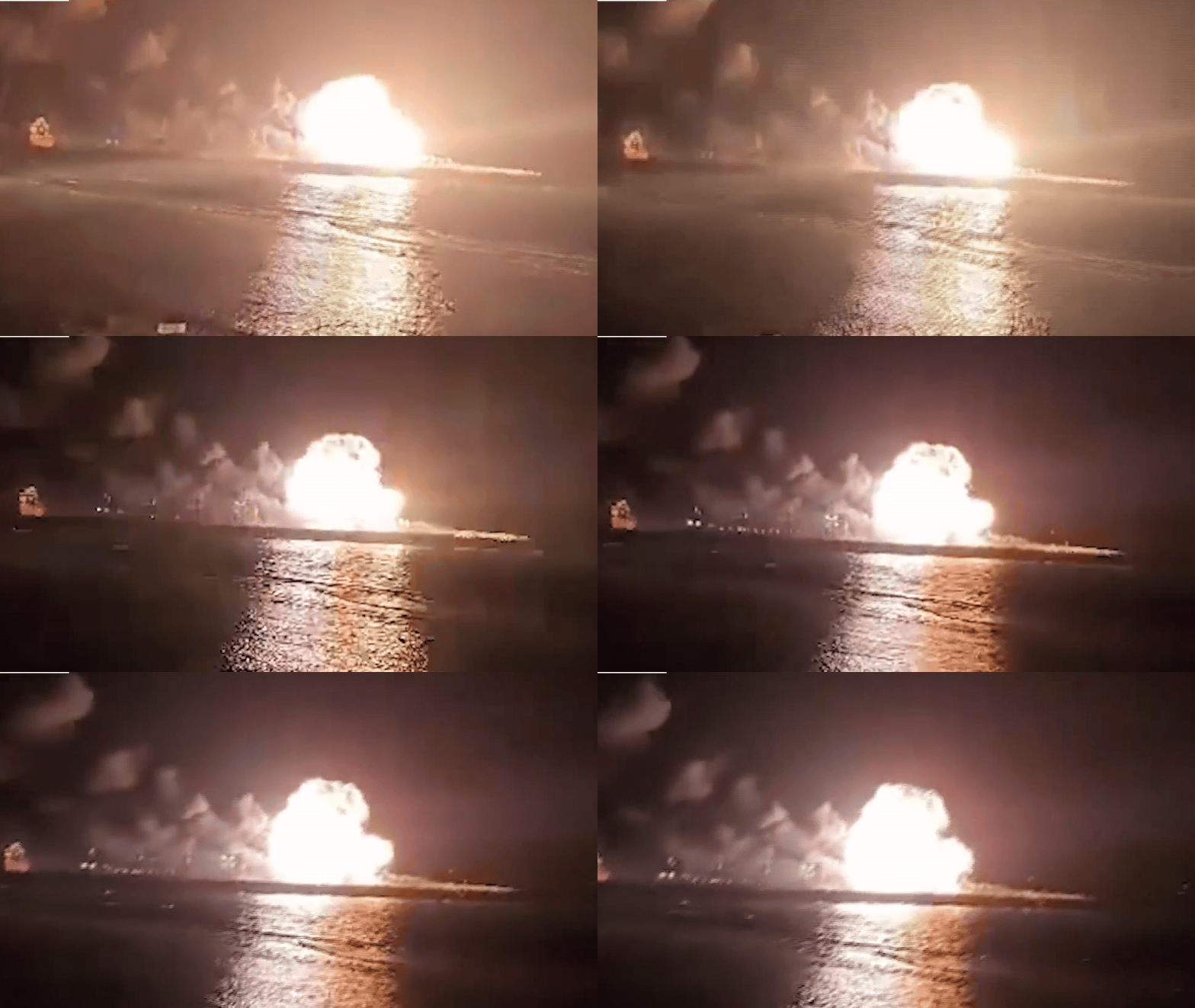
A Russian Navy corvette burning at a pier in eastern Libya isn't just another headline from a messy proxy conflict. Honestly, it blows up the quiet assumption that the war between Moscow and Kyiv stays neatly bottled up around Eastern Europe and the Black Sea.
Early on Sunday, November 22, 2026, suspected sea drones slammed into the Russian corvette Merkury while it was docked at Benghazi in eastern Libya. Satellite imagery from Vantor later showed the vessel capsized and largely sunk, with only its bow sticking out of the water, smoke still rising from parts of the superstructure, and debris scattered along the dock. Officials from the eastern Libyan administration said the ship had pulled in to refuel and take on supplies under an agreement between Moscow and eastern authorities.
That single strike raises a much bigger question than who piloted the drones. How did a war rooted in Ukraine turn a fractured North African port into a frontline naval ambush?
How the Benghazi Drone Attack Unfolded
According to eastern Libyan authorities and reporting from outlets like Al Jazeera and RFE/RL, the explosion hit the vessel before dawn on Sunday. Libyan officials said preliminary findings pointed to a drone attack and launched a joint investigation with Russia. Meanwhile, two Libyan military officials told the Associated Press that Ukrainian sea drones were launched from a base run by Ukrainian forces in western Libya, adding that at least four drones were intercepted while two struck the warship.
Casualty reports remain messy and contested, which is pretty typical right after a strike in a war zone. Local sources told Al Jazeera that an unknown number of Libyan and Russian nationals died and claimed the ship was carrying weapons, ammunition, and drones. Other accounts from eastern officials and medical sources pointed to injuries among Russian and Libyan crew members—with RFE/RL citing 10 injured crew members—without confirming fatalities. Neither Moscow nor Kyiv has publicly claimed or commented on the strike.
Things didn't stop at dawn, either. Later on Sunday evening, local media and eastern Libyan health officials reported a separate sea drone strike off Benghazi targeting a commercial vessel—described by eastern officials as a Malta-flagged merchant ship and by some OSINT reports as potentially linked to the sanctioned bulk carrier Ascalon—while Almasar TV reported that air and naval forces destroyed at least a dozen other sea drones off the coast.
Why Libya Became a Shadow Arena for This War
If you only look at Russia and Ukraine from a distance, Libya feels like a weird detour. Look closer at the map and the politics, though, and it makes cold strategic sense.
Since the 2011 uprising that toppled Muammar Gaddafi, Libya has been split between competing power centers: the UN-backed Government of National Unity in Tripoli in the west and a rival administration in the east backed by commander Khalifa Haftar's forces. Russia has spent years building military, logistical, and political ties with eastern Libya, turning Mediterranean ports like Benghazi into useful stops for naval vessels and supply runs.
Western Libya is a different story. Security analysts and reporting cited by CBS News have pointed to covert cooperation between Ukrainian intelligence and forces in western Libya—including drone specialists operating out of places like Misrata, Tripoli, and Zawiya—in exchange for military expertise. When two rival sides inside the same country court opposite foreign powers, a local political dispute easily becomes an international staging ground.
Even earlier in 2026, maritime clashes near Libya had already flared up. In March, a Russian liquefied natural gas tanker sank off the Libyan coast after an attack that Russian President Vladimir Putin blamed on Ukraine, part of a wider pattern of strikes against vessels tied to Russia's energy and military logistics across the Mediterranean and even up into the Baltic.
What Most Coverage Misses About Uncrewed Surface Vessels
A lot of early coverage treats a sea drone strike like a simple remote-controlled boat packed with explosives. That's way too simplistic.
In modern naval warfare, uncrewed surface vessels—often called sea drones or USVs—change the math of coastal defense. A traditional patrol boat or harbor sentry is built to spot big, obvious threats on radar or through binoculars. A low-profile sea drone sits right near the waterline, creates a tiny radar signature, and blends into harbor chop, wakes, and commercial traffic.
Port security is notoriously tricky when a ship is tied up alongside a pier. You aren't dealing with a wide-open ocean battle where a warship can maneuver at full speed and use layered screens. A moored ship is essentially a stationary target. Once drones slip past outer patrols or approach from an unexpected angle, air defenses tuned for high-flying aircraft or incoming missiles often aren't built to stop skimming surface targets at point-blank range.
Still, I wouldn't jump straight to treating every unverified claim as gospel. Reports of what the Merkury carried, exact casualty numbers, and whether a specific base launched the drones come from conflicting local accounts, intelligence speculation, and satellite snapshots. Satellite imagery proves the ship suffered catastrophic damage and capsized; it doesn't by itself prove who pressed the launch button.
The Bigger Risk for Shipping and Sovereignty
Both Libyan camps suddenly found themselves singing from the same hymn sheet on one point: nobody in Libya wants their ports turned into a shooting gallery for outsiders.
The eastern administration in Benghazi called the attack a serious violation of sovereignty and sought an international probe, including asking the United Nations to look into claims about launches from western Libya. Meanwhile, the Tripoli government warned against dragging Libyan ports, civilian facilities, and territorial waters into external wars. And the UN mission in Libya (UNSMIL) called for an immediate, independent, and transparent investigation without assigning blame.
That warning isn't just diplomatic posturing. Commercial shipping lanes in the Mediterranean already carry heavy risks, and Sunday's evening strike on a commercial vessel near Benghazi shows how fast spillover can hit non-military ships. When armed drones operate near busy coastal waters and merchant routes, insurance rates jump, crews face real danger, and innocent ships get caught in the crossfire.
What You Should Watch Next
If you're following this story—whether you care about geopolitics, maritime security, or global trade—don't get pulled in by dramatic clips or viral threads on day one. Keep an eye on a few concrete things instead:
- Independent satellite and OSINT follow-ups: Watch for follow-up imagery from commercial providers and verified assessments from maritime analysts over the next few days to see salvage efforts, oil or fuel containment, and whether any other vessels in Benghazi were hit.
- Official statements from Moscow, Kyiv, and the UN: Pay close attention to whether Russia retaliates diplomatically or militarily, whether Ukraine breaks its silence, and what UNSMIL or UN investigators actually substantiate.
- Maritime advisories in the central and eastern Mediterranean: If you track shipping, logistics, or regional travel, check updates from maritime security advisories and flag-state notices rather than relying on social media rumors.
- Shifts inside Libya itself: Watch whether this clash pushes rival Libyan factions into sharper confrontation or forces a rare moment of shared caution over foreign bases on Libyan soil.
The Merkury sinking in Benghazi shows how cheap, agile maritime drones can reach far beyond a single war zone. Where they show up next is anyone's guess—and that's the part that should make every coastal nation pay attention.