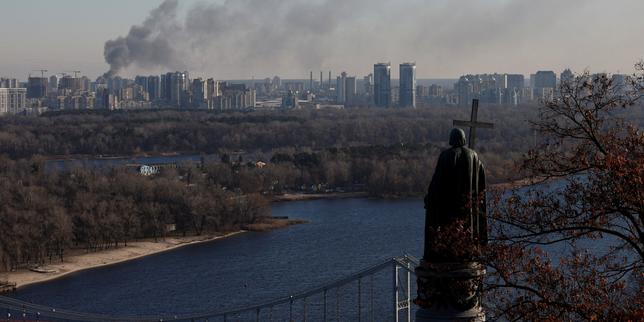
Silence keeps transformers standing. That's the blunt logic behind Kyiv's latest move to restrict information on Russian strikes as winter settles in.
On November 28, 2026, President Volodymyr Zelenskyy signed a decree enacting an October 23 decision by the National Security and Defense Council (NSDC) on strengthening critical infrastructure ahead of the 2026–2027 heating season. The directive orders the government to take urgent steps to ban media reporting on the consequences of damage to critical infrastructure, repair timelines, and the stages or status of building protective structures at key fuel, energy, and utility sites. Pair that with a wave of 155 Russian attack drones reported overnight on November 27—which triggered emergency power limits across six regions—and you can see why Kyiv is pulling down the shutters.
Honestly, this isn't a sudden whim. It's a pressure response. According to Ukraine's Ministry of Energy and analysts at the Centre for Economic Strategy (CES), Russian forces have hit energy facilities more than 1,000 times since September. Every public photo of a cracked substation or a leaked repair window hands targeters free battle-damage assessment.
Why Ukraine Is Tightening Strike Damage Rules Right Now
When a missile or jet-powered drone hits a high-voltage substation, the physical blast is only half the story. What happens on social media and in news feeds in the next twenty minutes shapes the next wave of attacks.
If reporters or local residents publish exact damage details or show which transformer bank failed, attackers learn whether a target was knocked offline or only grazed. Worse, if officials broadcast that repairs at a district heating plant will take ten days, planners know when to strike again—or when to shift fire elsewhere.
Ukraine's new decree goes straight after three leaks at once:
- Damage consequences: Reporting how badly energy, fuel, or utility sites were hit.
- Restoration timelines: Sharing schedules or estimates for bringing damaged infrastructure back online.
- Protective construction: Revealing progress, stages, or status on defensive shields and hardening works around critical sites.
The decree also pairs information curbs with physical deadlines. Authorities set a one-month window to deploy electronic warfare systems and second-level engineering defenses at key energy facilities, alongside two months to cut regulatory red tape for distributed power generation.
What Article 114-2 Already Criminalized
If you've followed Ukrainian wartime law since the full-scale invasion began in February 2022, you might wonder what's actually new here. Long before this decree, Ukraine added Article 114-2 to its Criminal Code, making unauthorized sharing of sensitive details about air defense positions, troop or equipment movements, and real-time strike consequences a serious crime—carrying sentences of up to twelve years in prison when geolocated photos or videos are published ahead of official releases.
Still, there's a real difference between criminalizing unverified citizen footage in real time and formally directing the government to bar media coverage of damage outcomes, repair timelines, and protective engineering work. One targets viral street leaks; the other tightens the official information boundary around grid recovery and hardening itself.
The Grid Math Behind the Secrecy
Look closely at the energy numbers from late November 2026, and the secrecy makes even more sense. Data from Energy Map and the Centre for Economic Strategy shows that after a massive Russian attack on November 20, Ukraine halted electricity exports completely on November 22 while electricity imports jumped nearly 3.5-fold—from 5.7 gigawatt-hours (GWh) to 19.6 GWh—hitting their highest daily level since mid-June.
Why did that happen? Because transmission bottlenecks are brutal. CES noted that even during long blackouts, surplus power in one part of the country sometimes couldn't reach deficit areas when high-voltage lines and substations were damaged. The November 20 strike was severe enough that nuclear power plants had to cut output because generated electricity couldn't be delivered to consumers. In some areas, residents faced more than twelve hours a day without power before deep winter frosts even locked in.
If you're an engineer trying to reroute megawatts through a bruised grid while crews weld pipes and replace transformers in freezing weather, every extra headline about which link broke adds noise and risk. When repair funding is already tight—something CES explicitly flagged—protecting the remaining pieces becomes survival math.
Where Censorship Hits a Wall
Here's the catch nobody in Kyiv can wave away with a signature: a decree on paper doesn't automatically lock down the internet.
Dmytro Lytvyn, communications adviser to President Zelenskyy, noted that the Security Service of Ukraine (SBU) and the government will determine enforcement measures around the destruction-reporting ban, while openly acknowledging that enforcement is complicated because so many posts come from anonymous Telegram channels.
Anyone who has watched modern information warfare knows how messy that gets. Anonymous accounts don't sit inside a newsroom with a press badge to revoke. Phones snap photos from apartment windows, clips bounce across messaging apps in seconds, and open-source intelligence (OSINT) analysts—such as those cited in assessments by the Institute for the Study of War—cross-check commercial satellite imagery, power-outage reports, and social media fragments to piece together what happened on the ground.
There's also a credibility trap for any government, even one fighting for survival. When official news goes quiet or lags behind lived reality, rumors fill the vacuum fast. If a neighborhood loses heat for two days and nobody knows why, people guess—and guesses are often worse than careful, delayed facts. Tight security helps keep strike planners blind, yet overly opaque communication can strain public trust at home and make verification harder for international partners.
Both Sides Are Playing the Same Game
It's worth stepping back to see the bigger pattern. Information control isn't unique to one capital in this war. Both Kyiv and Moscow have tightened rules around strike reporting as long-range drones and missiles reshape the conflict.
In late November 2026, the Institute for the Study of War reported that Russian lawmakers moved forward with bills aimed at banning independent or unauthorized reporting on the aftermath of Ukrainian strikes, backed by fines or prison time, while Russian security agencies also clamped down on non-classified military-technical chatter amid intensifying Ukrainian long-range strikes inside Russia—including attacks on oil refineries and logistics hubs.
In theory, total information control gives a military a clean slate. In practice, both sides keep running into the same friction: modern sensors, satellites, commercial imagery, and anonymous messaging networks leak like a sieve. Restricting domestic media is much easier to draft than enforcing total silence across every screen.
Common Mistakes People Make When Reading Strike Bans
When a government restricts coverage of strike damage, readers and analysts tend to fall into a few predictable traps:
- Treating "no news" as "no damage": A drop in published photos doesn't mean a substation wasn't hit. Sometimes the quietest days follow the heaviest strikes.
- Assuming a decree equals total blackout: Legal bans shape mainstream outlets and official briefings, yet anonymous channels, local chat groups, and satellite passes still surface clues.
- Confusing operational security with spin: Hiding transformer damage or repair schedules to protect a crew isn't the same thing as fabricating battlefield wins—though telling the difference requires checking multiple independent sources.
- Ignoring the physical work underneath: Media bans grab headlines, yet the real stakes sit in the decree's practical deadlines for electronic warfare, protective structures, and backup power.
Practical Next Steps for Following This Story
If you're tracking this decree, Ukraine's energy grid, or wider wartime reporting rules over the coming weeks, take a disciplined approach:
- Read official decrees alongside independent analysts: Compare wording from outlets like The Kyiv Independent or Ukrainska Pravda with independent assessments from the Institute for the Study of War and economic trackers like the Centre for Economic Strategy.
- Watch grid and import indicators, not just headlines: Shifts in electricity imports, export halts, or regional outage durations often reveal systemic grid strain more reliably than single-incident rumors.
- Treat anonymous Telegram posts as unverified leads: Don't take unconfirmed strike photos or dramatic damage claims at face value until corroborated by credible reporting or imagery.
- Track the one-month and two-month deadlines: Pay attention to whether concrete progress is reported on electronic warfare deployment, protective structures, and distributed power rules—that's where the policy meets reality.