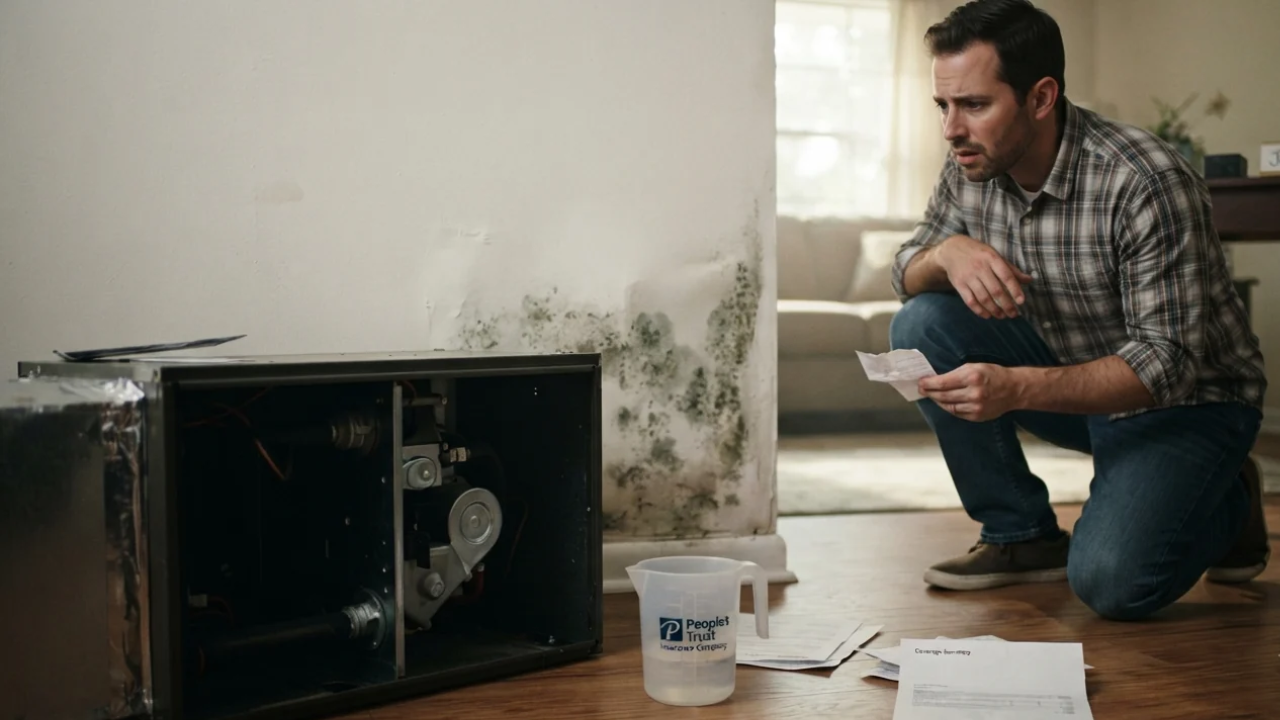
Seeing two $10,000 numbers on your policy can trick you into thinking you have $20,000 sitting in reserve when an air conditioner leaks. You don't. In a ruling handed down on November 25, 2026, Florida's Third District Court of Appeal reversed a lower court judgment for homeowner Jacinto Molina, wiping out a second $10,000 mold award after People's Trust Insurance Company had already paid $10,000 for water damage from an air-conditioning system.
The short answer is blunt. A policy's mold limit isn't automatic bonus money stacked on top of a water damage cap. When both provisions tie back to the same underlying water event and explicitly state they don't increase the property limit, paying the water sublimit can exhaust what the insurer owes.
Most news summaries treat this like a quirk of one bad contract. Honestly, it's a trap built into how modern Florida homeowners policies are written, priced, and read by courts.
http://googleusercontent.com/lmdx_content/pRTzIihDKdBWPJUoJfiwuwvLMxmtqPSblpusJVuftFkKDGkheymWJCYsjVCLDGoSvmJAyfLqmZHMKhGFDeuqcNmtFWHHkIoEinsgOHWlqCtaUuAUpsVOykoBlbAImybOOYQdw1871854 For another angle on this story, see the latest update from Business Insider.
What Happened in the Florida Mold Policy Limit Appeal
The underlying facts in People's Trust Insurance Company v. Jacinto Molina (Case No. 3D25-1166) were straightforward. Water leaked from an air-conditioning system, causing water damage and subsequent mold growth.
People's Trust paid $10,000 under a Limited Water Damage Coverage endorsement covering water discharge from an AC system. Molina then sought another $10,000 under a separate mold coverage provision for damage tied to a covered peril. A Miami-Dade County trial court sided with Molina, pushing his recovery to $20,000 for the loss.
The Third District Court of Appeal disagreed. Reading the insurance policy as a whole and giving each clause effect, the appellate panel held that the mold provision did not raise the cap on underlying property damage. Because the air-conditioning discharge fell under the $10,000 limited water damage endorsement, the insurer had already hit the ceiling for that event.
There was also a second piece that trips up homeowners every single week. The trial court had leaned on a coverage checklist when awarding the extra money. The appeals court rejected that reasoning, citing Florida Peninsula Insurance Company v. Cespedes and noting that Florida coverage summaries exist for informational purposes rather than rewriting the contract itself.
Why a Coverage Checklist Won't Save a Claim
Agents hand over coverage checklists all the time. Homeowners stick them in a folder and treat them like a receipt of promises.
Under Florida law, those checklists summarize policy features at a high level. When a dispute hits a courtroom, judges look at the actual policy form, endorsements, and definitions, not a summary sheet. If the endorsement says coverage does not increase the underlying damage limit, a two-page checklist won't create a second $10,000 bucket.
Why Florida Water and Mold Limits Feel So Confusing
Florida's insurance market has spent years squeezing water and mold exposure. Years ago, broad water and mold claims helped destabilize carriers and drive premiums sky-high. Today, $10,000 sublimits on water discharge or fungi/mold are standard across many Florida policies, including forms from Citizens Property Insurance Corporation and private carriers, though exact limits vary by insurer and endorsement.
From a homeowner's perspective, two separate lines in a policy look like two separate pockets. You see $10,000 for water damage. You see $10,000 for mold. Anyone doing basic math expects $20,000.
Insurers view risk differently. Water intrusion and mold growth aren't two unrelated disasters when a drain pan overflows or an air handler leaks inside a wall cavity. One event triggered the chain. If the contract links the mold benefit to the underlying covered peril and caps total property recovery at the endorsement sublimit, stacking fails.
That doesn't mean every mold claim gets swallowed by a single $10,000 check. Policy wording matters enormously. Some policies treat mold as a standalone sublimit subject to specific conditions, while others restrict mold arising from excluded long-term seepage or maintenance neglect. Courts in Florida—such as in Hicks v. American Integrity Insurance Co.—have also examined how seepage exclusions apply to sudden versus ongoing leaks depending on contract language and proof. Still, when an endorsement expressly caps underlying damage at $10,000, wishful thinking loses to contract text.
Real Mistakes Homeowners Make After an AC Leak
Having dealt with property claims and read how disputes unfold, I see the same preventable missteps repeat across Florida homes. AC leaks are especially sneaky because air handlers often sit in closets, garages, or attics where moisture goes unnoticed until drywall sags or musty odors set in.
- Waiting to report while "figuring it out": Homeowners sometimes spend two weeks calling repair techs or drying baseboards before notifying the carrier. Delays hand insurers ammunition to argue late notice or worsened damage from lack of prompt mitigation.
- Mixing up water mitigation and mold remediation invoices: If contractors lump general drying, demolition, and mold treatment into one vague bill, sorting out what falls under what clause becomes a headache. Clear line-item invoices help show what work addressed physical water damage versus microbial growth.
- Assuming a high dwelling limit protects you: Having $400,000 in Coverage A dwelling protection sounds comforting. Sublimits override big dwelling numbers for specific perils like mold or limited water discharge.
- Ignoring AC maintenance: Florida humidity pushes HVAC systems hard year-round. Clogged condensate lines and neglected pans give insurers room to argue wear, tear, or maintenance issues rather than a sudden covered loss.
Even with strong documentation, $10,000 doesn't stretch far once tear-out, drying equipment, mold remediation, and drywall/trim replacement start adding up. In a state where repairs move fast and labor isn't cheap, a five-figure cap can vanish before the walls are even closed back up.
Is There Any Debate Around These Limits?
Yes, plenty. Consumer advocates argue that tight sublimits leave families holding massive out-of-pocket repair bills after legitimate leaks in humid climates. Insurers counter that strict sublimits keep premiums from spiraling further and prevent claims inflation on secondary mold work. Both sides point to real pressures in the Florida market, and appellate rulings like Molina's decision remind policyholders that courts enforce the policy language written—not what feels fair after the fact.
Practical Next Steps If You Own a Home in Florida
You don't need a law degree to protect yourself better than most policyholders do. Take a few concrete steps before or right after a leak happens:
- Read the actual endorsements, not just the checklist: Pull your declarations page and water or mold endorsements. Look specifically for language saying whether a sublimit increases or does not increase other property limits.
- Ask your agent about available options before a loss: Check whether your carrier offers higher mold or water endorsements, or whether your policy locks you into a flat $10,000 cap. Once damage occurs, you can't shop your way out of that policy year's limit.
- Stop the moisture and document everything immediately: Shut off the AC or water source, take timestamped photos and video, keep all invoices itemized, and report the claim promptly per your policy terms.
- Get independent estimates and legal or public adjuster input when numbers clash: If repair costs blow past a sublimit or the insurer's reading of the endorsement conflicts with your reading, have a licensed Florida insurance attorney or licensed public adjuster review the exact contract language before signing off.
Contracts govern payouts, not assumptions. Know what your policy actually caps before water hits the floor.