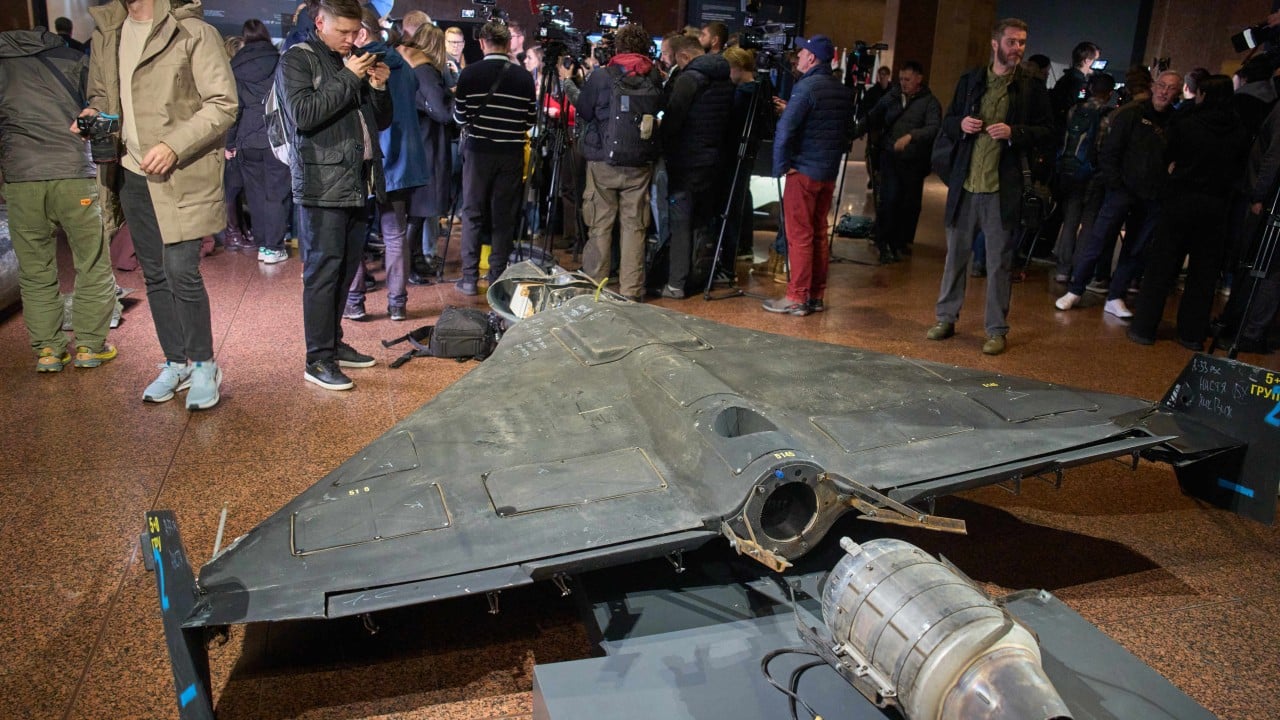
Warfare changes fast, but turning science fiction into a frontline reality usually takes decades. Not this time. Ukraine just became the first nation in history to shoot down a high-speed, jet-powered enemy drone using a directed-energy laser.
Let's look past the initial headlines. This intercept wasn't achieved by a superpower with a trillion-dollar defense budget. It happened because a local private-defense initiative had to innovate or get crushed.
The Reality of the Blysk Laser Intercept
The system responsible for this milestone is called Blysk, built by the Ukrainian defense tech firm Carmine Sky. It was deployed to protect critical infrastructure from a Russian jet-powered drone—specifically a variant of the fast-moving Geran series.
Traditional air defense relies on kinetic force. You fire a missile costing hundreds of thousands or even millions of dollars at a flying machine that costs a fraction of that amount. That math is completely unsustainable over a long war.
Enter directed energy. Laser defense systems change the economic equation entirely. Each shot costs pennies or a few dollars in electricity, moving at the speed of light. You don't lead the target the same way. You point, burn, and drop it.
Serhii Beskrestnov, a military adviser to the Ukrainian government, confirmed the milestone, noting that the system operates under a wider private-defense framework. About 100 private companies are currently tinkering, building, and field-testing tech outside traditional bureaucratic defense procurement channels.
Why This Milestone Is Not a Silver Bullet
Everyone loves a sci-fi breakthrough, but real-world engineering is messy. Before you assume laser walls will instantly clear the skies, you have to look at the severe limitations holding these systems back.
- Weather dependency: Thick clouds, heavy fog, rain, and dust degrade laser beams drastically. Light scatters, and power densities drop.
- Thermal management: Firing high-powered beams generates massive internal heat. Without massive cooling rigs, systems overheat rapidly between shots.
- Target dwell time: Hitting a stationary target in a lab is easy. Keeping a focused beam on a fast, vibrating, maneuvering jet drone long enough to burn through a control surface or fuel tank takes insane tracking precision.
This is why defense officials are quick to pump the brakes on mass production. This first successful combat downing proves the physics work outside a controlled test range, but turning a fragile prototype into a ruggedized frontline tool is an entirely different beast.
The Broader Shift in Modern Defense Tech
What's happening in Eastern Europe right now is a brutal incubator for global military strategy. When nations face existential pressure, traditional R&D timelines shrink from ten years to ten weeks.
We are watching the birth of decentralized military manufacturing. Small software shops, hardware hackers, and private funding pools are outpacing legacy defense contractors. The Blysk system emerged from the Brave1 defense tech cluster, a state-backed platform designed to pull garage startups into the national security apparatus.
Air defense is entering an era of layered economics. Missiles handle high-altitude ballistic threats, electronic jamming handles swarms, and localized directed-energy weapons will eventually take over close-range point defense for power grids and substations.
The laser era of warfare didn't start in a sterile desert laboratory in New Mexico. It started in the smoke and mud of an active combat zone, built by engineers who didn't have the luxury of waiting for permission.
Keep an eye on how these private-public defense clusters scale over the next year. The technology is raw, but the economic imperative to ditch million-dollar interceptors means directed energy is here to stay.